


Introduction
Student life can feel busy and overwhelming, especially when classes, assignments, exams, and personal activities all compete for attention. Many students struggle to balance everything, which often leads to stress and poor performance. That is why learning student time management tips is one of the most important skills you can develop. Good time management is not just about studying more hours; it is about using your time wisely and focusing on what truly matters. When you manage your time well, you can complete tasks on time, reduce pressure, and even enjoy your free time without guilt.
In today’s fast-paced world, distractions are everywhere. Social media, mobile phones, and entertainment can easily take up hours without you realizing it. However, by applying practical student time management tips, you can take control of your schedule and build habits that support your goals. Whether you are in school, college, or university, these tips can help you stay organized and productive.
This guide is designed in simple English so beginners and intermediate learners can easily understand and apply the concepts. You will learn what time management really means, why it is important, and how to use step-by-step strategies to improve your daily routine. By the end, you will feel more confident and ready to manage your time effectively.
What is Student Time Management Tips?
Student time management tips refer to practical strategies that help students plan, organize, and use their time efficiently. These tips focus on prioritizing tasks, setting goals, and avoiding distractions so students can complete their work on time.
In simple words, it is about making a schedule and following it in a smart way. Instead of doing everything at the last minute, students learn to divide their tasks into smaller parts and complete them step by step.
For example, instead of studying for an exam in one night, a student can study a little every day. This makes learning easier and less stressful.
Student time management tips also include techniques like creating to-do lists, using calendars, and setting deadlines. These methods help students stay focused and avoid wasting time.
Overall, it is a skill that helps students balance their academic work and personal life without feeling overwhelmed.
Why is Student Time Management Tips Important?
Time management is important because it helps students stay organized and reduce stress. When you manage your time properly, you can complete your tasks without rushing.
First, it improves academic performance. Students who follow student time management tips can prepare better for exams and complete assignments on time. This leads to better grades.
Second, it reduces stress and anxiety. When you know what you need to do and when to do it, you feel more relaxed.
Third, it creates more free time. By working efficiently, you can finish your tasks early and enjoy hobbies or spend time with friends and family.
Another reason is that it builds discipline. When you follow a schedule, you develop good habits that help you in the future.
Finally, good time management prepares you for real life. In professional life, managing time is a key skill. Learning it as a student gives you a strong advantage.
Detailed Step-by-Step Guide
Step 1: Set Clear Goals
Start by setting clear and realistic goals. Know what you want to achieve in your studies.
For example, instead of saying “I will study more,” say “I will study math for one hour daily.”
Clear goals give direction and help you stay focused.
Step 2: Create a Daily Schedule
Make a daily timetable that includes study time, classes, and breaks.
Write down everything you need to do in a day.
This is one of the most effective student time management tips because it keeps you organized.
Step 3: Prioritize Tasks
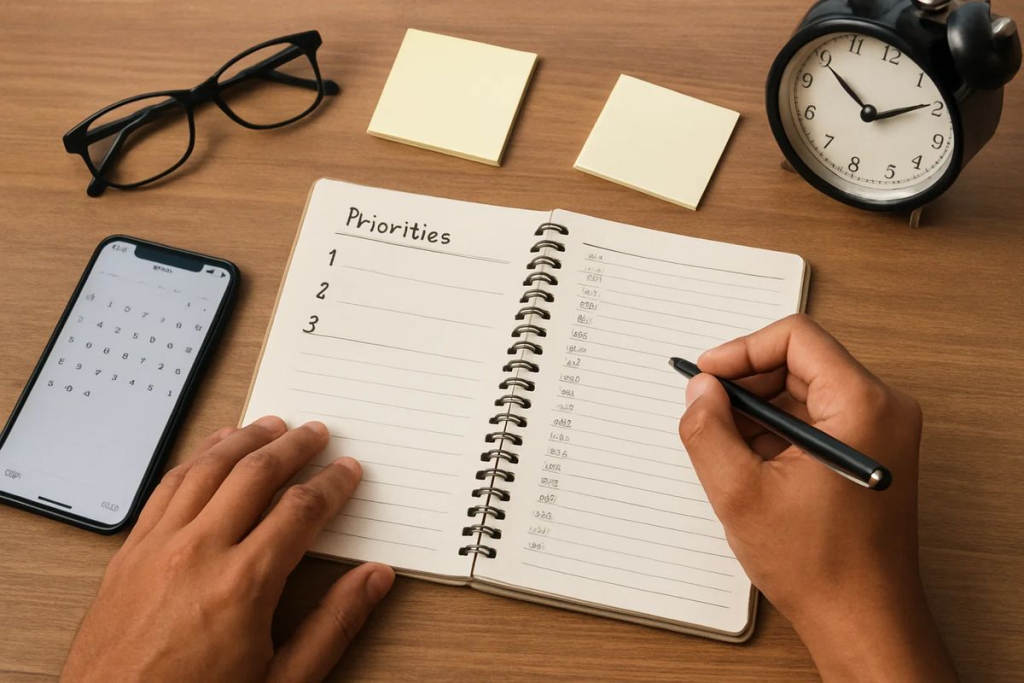
Not all tasks are equally important. Some tasks need immediate attention, while others can wait.
Focus on high-priority tasks first.
For example, complete assignments with deadlines before doing less important activities.
Step 4: Break Tasks into Small Parts
Large tasks can feel overwhelming. Break them into smaller steps.
For example, divide a big project into research, writing, and editing.
This makes the task easier and more manageable.
Step 5: Avoid Distractions
Identify what distracts you the most. It could be your phone, social media, or noise.
Keep your study area clean and quiet.
Turn off notifications while studying.
Step 6: Use Time Blocks
Study in focused time blocks, such as 25 to 50 minutes.
Take short breaks between sessions.
This method improves concentration and productivity.
Step 7: Review Your Progress
At the end of the day or week, review what you have completed.
This helps you understand your progress and improve your plan.
Step 8: Stay Consistent
Consistency is key to success. Follow your schedule regularly.
Even small daily efforts can lead to big results over time.
Benefits of Student Time Management Tips
- Helps complete tasks on time
- Reduces stress and anxiety
- Improves academic performance
- Increases productivity
- Creates more free time
- Builds discipline and responsibility
- Improves focus and concentration
- Helps maintain a balanced life
Disadvantages / Risks
- Over-planning can lead to stress
- Strict schedules may feel restrictive
- Lack of flexibility can cause frustration
- Poor planning may waste time
- Ignoring breaks can lead to burnout
Common Mistakes to Avoid
One common mistake is procrastination. Many students delay tasks until the last minute, which leads to stress.
Another mistake is setting unrealistic goals. Trying to do too much in a short time can cause failure.
Students also forget to take breaks. Continuous study without rest reduces productivity.
Poor planning is another issue. Without a clear plan, time gets wasted.
Many students ignore priorities and spend time on less important tasks.
Finally, not reviewing progress is a mistake. Without checking your work, you cannot improve.
FAQs
1. What are the best student time management tips?
The best tips include setting goals, creating a schedule, prioritizing tasks, and avoiding distractions. These simple steps can greatly improve productivity.
2. How can I avoid procrastination?
Break tasks into smaller parts and start with easy steps. Setting deadlines and removing distractions also helps.
3. How many hours should a student study daily?
It depends on the student, but 2 to 4 focused hours are usually enough if managed well.
4. Can time management improve grades?
Yes, effective time management allows better preparation and reduces last-minute stress, which improves performance.
5. What tools can help with time management?
Tools like planners, calendars, and to-do lists are very useful for organizing tasks.
6. Is it okay to take breaks while studying?
Yes, short breaks are important. They refresh your mind and improve focus.
Expert Tips & Bonus Points
Always start your day with the most important task. This ensures that critical work gets done first.
Keep your study space organized. A clean environment improves focus.
Use a timer to manage study sessions. This keeps you disciplined.
Stay healthy by eating well and getting enough sleep. Good health supports better time management.
Reward yourself after completing tasks. This keeps you motivated.
Learn to say no to unnecessary activities that waste time.
Stay positive and patient. Building time management skills takes practice.
Conclusion
Student life is full of challenges, but with the right approach, managing time becomes easier and more effective. By following practical student time management tips, you can take control of your daily routine and achieve your goals without unnecessary stress. It is not about working harder but working smarter and making better use of your time.
When you plan your day, set clear goals, and stay consistent, you will notice a big improvement in your productivity. You will complete tasks on time, feel more relaxed, and have extra time for yourself. These benefits not only improve your academic life but also prepare you for future success.
Remember that time management is a skill that develops over time. You may not see results immediately, but with patience and practice, you will get better. Start with small changes, such as creating a schedule or reducing distractions, and gradually build stronger habits.
In the end, the key to success is balance. Study well, take breaks, and enjoy your life. With the right mindset and these simple strategies, you can make the most of your time and achieve everything you aim for.
